Friction Welding
American Friction Welding

Rotary Friction Welding for Production Parts

Contract friction welding for demanding components, dissimilar metals, near-net-shape designs and production programs that need repeatable quality.

18High-precision friction welding centers
ISO 9001:2015Certified friction welded assembly manufacturing
Since 1986Dedicated friction welding experience
Waukesha, WINorth American contract production
Find the Right Path

What are you trying to solve?

Choose the closest fit. We’ll show you what AFW would evaluate and where to go next.

MaterialsApplication Fit

Can friction welding join the metals your design needs?

Rotary friction welding can join many similar and dissimilar metal combinations without relying on a conventional molten weld pool. The real question is whether the material pairing, interface geometry and production requirements work together.

Good fit when

  • Material combinations are difficult or inefficient with conventional fusion welding
  • The design places premium material only where it is needed
  • A rotational component can use a full cross-sectional bond

AFW would review

  • Base materials and alloy specifications
  • Joint interface geometry and section size
  • Critical dimensions and downstream machining
  • Production quantity and inspection requirements
For Engineering

Start with the material pairing, geometry and required joint performance. The Dissimilar Metals Chart, applications library and Design Guide can help narrow the question before a drawing review.

For Purchasing / Sourcing

Focus on whether AFW can support the specified materials, production quantity, inspection requirements and downstream operations under one production program.
Cost + EfficiencyNear-Net Shape

Can the component be built with less raw material and machining?

The opportunity is often bigger than replacing one weld. Friction welding can let a component be built from separate sections, placing material and machining only where the finished part actually needs them.

Good fit when

  • Large machined parts are currently cut from expensive solid stock
  • Components combine different diameters, shapes or material grades
  • Machine time or material utilization is driving cost

AFW would review

  • Current part construction and raw-stock route
  • Where premium material is actually required
  • Machining removed before and after welding
  • Volumes, finishing and inspection requirements
For Engineering

Compare the current one-piece or multi-process construction against a friction-welded route and determine where geometry, material selection and machining sequence can change.

For Purchasing / Sourcing

Evaluate whether lower material usage, fewer operations and a consolidated production route improve total cost and sourcing complexity rather than simply comparing weld price.

EngineeringDesign Review

Is the part geometry a good fit for direct-drive rotary friction welding?

A strong application starts with more than material compatibility. AFW evaluates the joint interface, rotational geometry, part size, critical dimensions and what has to happen before and after the weld.

Good fit when

  • Rotational parts have a defined weld interface
  • Components can be simplified into weldable sections
  • The design needs repeatable solid-state joining in production

AFW would review

  • Joint geometry and rotational symmetry
  • Part size, section thickness and critical features
  • Material pairing and required joint properties
  • Testing, inspection and downstream operations
For Engineering

Use the Rotary capability page and Design Guide to review process limits, joint concepts and design considerations, then send the drawing for an application-specific review.

For Purchasing / Sourcing

If the design is still being finalized, early AFW review can help establish whether the eventual production route is practical before sourcing and qualification work begins.

ProductionCapacity

Do you need another qualified production path for friction-welded parts?

Capacity questions are not only about machine count. The production route also has to account for material, inspection, secondary operations, inventory and continuity around the weld itself.

Why AFW may fit

  • 18 high-precision friction welding centers
  • Material procurement, machining, flash removal and finishing coordination
  • Weld testing and production quality controls

AFW would review

  • Part families and expected production volume
  • Existing drawings, specifications and process requirements
  • Material availability and supporting operations
  • Inspection, delivery and inventory requirements
For Engineering

Focus on transferring the process requirements, maintaining weld repeatability and integrating inspection and downstream operations into the production route.

For Purchasing / Sourcing

Evaluate available production capacity together with quality, material procurement, inventory support and supplier redundancy rather than treating the weld as a stand-alone operation.

Supply ChainSecond Source

Can AFW support supplier diversification without changing the part’s intent?

A second-source review has to reproduce more than the drawing. The material, weld process, inspection requirements, downstream operations and production expectations all have to be understood together.

Why AFW may fit

  • Dedicated friction welding production experience since 1986
  • ISO 9001:2015 certified quality system
  • Supporting material, machining, testing and inventory capabilities

AFW would review

  • Current drawing and material specifications
  • Existing weld or qualification requirements
  • Production volumes and continuity expectations
  • Inspection and secondary-process requirements
For Engineering

Focus on whether AFW can reproduce the required joint, process controls and verification path using the available drawing and specification package.

For Purchasing / Sourcing

Focus on supplier diversification, continuity, quality-system fit and how much of the surrounding production route AFW can support under one source.

Start HereApplication Review

Not sure which category fits? That’s fine.

Most opportunities do not begin as a neatly defined “friction welding problem.” Send the information you have now and AFW can help determine whether rotary friction welding belongs in the solution.

Send what you have

  • Drawing or part sketch
  • Materials or current specifications
  • Expected quantities or production range
  • Critical dimensions, testing or performance requirements

AFW can help determine

  • Whether the part is a practical friction welding candidate
  • Which technical questions need to be answered next
  • Whether design, material or production changes could improve the route
  • Which AFW resource or team should handle the next step
For Engineering

You do not need a completed friction-welding specification before contacting AFW. Start with the design intent, materials and performance requirements you already know.

For Purchasing / Sourcing

You do not need every process detail before starting. Share the current drawing, volumes, quality expectations and sourcing problem so AFW can help define the production path.

The decision interface is a starting point, not a qualification form. AFW can review an application using the information available now.

Friction Welding

A production joining process built around the part.

American Friction Welding (AFW) is North America’s largest subcontract friction welder with 18 high-precision friction welding centers. We are experts at welding dissimilar metals and near-net-shape parts using direct-drive rotary friction welding to deliver full-strength, deep-penetration welds in the most demanding applications and industries. Dramatic cost savings result from reducing the working material, machining, and surface finishing needed to produce finished metal components.

Go Deeper by Role

More detail for the team evaluating the program.

Friction welding dates back to the mid-50s - 63 years ago. For 33 years, AFW has served as an advocate, standards contributor, and driving force of industry development. The technology has evolved into a sound joining alternative providing design flexibility and cost savings across all manufacturing channels. Our engineering team is here to provide straightforward answers, guidance, and solutions. When friction welding is the solution - AFW is the company to trust!

Solutions for Manufacturing Engineers

Manufacturing Engineers

  • Increase Throughput
  • Save Machine Time
  • Reduce Material Waste
  • Maintain Quality
Production Solutions
Solutions for Purchasing Agents

Purchasing Agents

  • Diversify Your Sourcing
  • Reduce Lead Times
  • Eliminate Die Expenses
  • Buy Less Material
Sourcing Solutions
Friction Welding Video
How Friction Welding Works

Solid-state joining through motion and forge pressure.

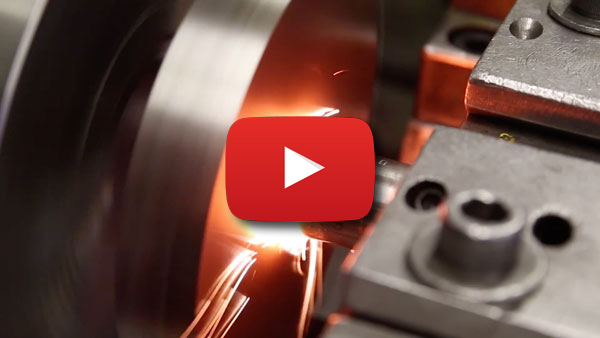
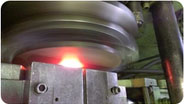
Rotary friction and inertia welding is a solid-state process joining two metal components by applying rotational motion and forging pressure to the objects. High temperatures generated by friction transform the point of contact into a plasticized state. This area is known as the weld interface. The pressure is applied to forge a metallic bond between the atoms of the objects.

The overall molecular integrity of the original components remains intact due to the narrow heat-affected zone of the technology. Friction welding provides a complete cross-sectional bond without using fluxes or filler metal. Metal spin welding or rotary welding cycle times vary by metal type, shape, and weight.

See the full friction welding process
Materials + Component Geometry

Join materials and shapes that make the component more efficient to manufacture.

AFW evaluates material pairings, rotational geometry and downstream manufacturing requirements together, so the weld becomes part of the production strategy rather than a separate operation.

Materials We Friction Weld

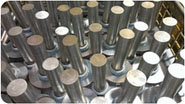
We specialize in friction welding aluminum alloy, brass, bronze, copper, nickel, silver, steel alloy, carbon steel, stainless steel, tantalum, titanium, tungsten, and many other metal alloys. One object spins at a controlled rotating speed while the other is stationary. Friction heats the dissimilar material where they contact. It successfully bonds two different metals where conventional means may not work.

The joining process is an alternative to brazing, electron beam, explosive, and butt welding methods.

Explore Dissimilar Metals

Common Friction-Welded Part Geometries

It provides a high-speed, lower-cost solution to join:

Welding Journal Resource

Friction Welding Continues to Increase Its Dependability

John Fischer, president of AFW, recently wrote an article for the Welding Journal titled “Friction Welding Continues to Increase Its Dependability.” Download your PDF copy to learn about the advantages and recent advancements of the rotary friction welding process.

Download the PDF
Quality System Certification
Quality Assurance

Production controls built around repeatability.

AFW is ISO 9001:2015 Certified in manufacturing custom friction welded assemblies and providing the services of material procurement, friction welding, CNC machining, and customized inventory programs. The company has a fully dedicated quality manager and a quality department. Our dedication to quality is absolute and without compromise as we focus on delivering the highest quality products and services.

We emerged as the industry leader with a 100% customer satisfaction focus, state-of-the-art manufacturing equipment and processes, and a dedication to quality that is second to none. Every part we produce adheres to a Weld Procedure Specification (WPS) that dictates acceptable manufacturing tolerance parameters. Our welding centers, equipped with advanced high-precision controllers, monitor every critical variable during the weld cycle to ensure product conformance. Each cycle is measured, with data recorded for future parameter review. Our quality assurance team performs ultrasonic weld inspection on a minimum of 10% of all parts produced to ensure conformance and quality of working materials.

View our quality control and ISO 9001 certification.

Repeatable Welding

Repeatable Welding

A climate-controlled facility delivers another level of consistency to our manufacturing process. Repeatable bonding relies on controlled conditions, which include its environment. All working materials acclimate to operating ambient temperature before production, per approved WPS.

Reliable Manufacturing

Reliable Manufacturing

Our full-time maintenance team manages over $200,000 of spare manufacturing equipment parts. They provide preventive and predictive maintenance, minimizing unscheduled downtime and increasing the on-time delivery of your product.

Supply Chain Experts

Supply Chain Experts

AFW partners with customers to provide turn-key solutions for their long-term manufacturing programs – Offering a competitive advantage through efficient supply chain manufacturing, a continuous improvement focus, and unmatched customer service.

Supply Chain Manufacturing

Proud Supplier To

Trusted across demanding manufacturing programs.

American Welding Society Sustaining Member AWS Sustaining Member
Next Step

Have a part, material pairing or production problem to review?

AFW can review the drawing, materials, quantities, critical dimensions, inspection requirements and production goals to determine whether rotary friction welding is a fit.

Contact American Friction Welding today for more information or to request a quote!